In Windows 10 Creators Update, the Registry Editor status bar has been removed, as it now has an address bar at the top. The status bar doesn’t appear even if you turn off the address bar in Regedit. Another change is that you can modify the default font face, weight and style in the new the Registry Editor.Read more
registry
Enable Warning on Closing Multiple Tabs in Microsoft Edge

By default, Microsoft Edge doesn’t issue a warning if you close your Microsoft Edge browser window with multiple tabs open. Sometimes we may accidentally close the browser window and wondering how to restore the session back.
You can press Ctrl + Shift + T to reopen the tabs closed during the last browser session.
Additionally, you can force Microsoft Edge to warn you when you attempt to close the browser window accidentally with multiple open tabs. Here’s how to do that.Read more
OneNote 2016 Screen Clipping Shortcut Key – How to Change?
Windows 10 Creators Update replaces OneNote’s popular screen clipping shortcut: Win + Shift + S. Starting with the Creators Update, this shortcut will be a global hotkey — an Operating System feature. Win + Shift + S will capture a screen region from any application and copy it to clipboard — powered by Snipping Tool’s new "/CLIP" command-line.Read more
Remove Amazon Drive from Explorer Navigation Pane
The client software provided by cloud storage providers like OneDrive, Dropbox, Google Drive would add or pin their entries in the left pane of Explorer. If you had been using Amazon Drive and later uninstalled it, the “Amazon Drive” entry may still remain in Explorer navigation pane.Read more
Microsoft Edge – Prevent Download of Unsafe Files Blocked by SmartScreen Filter
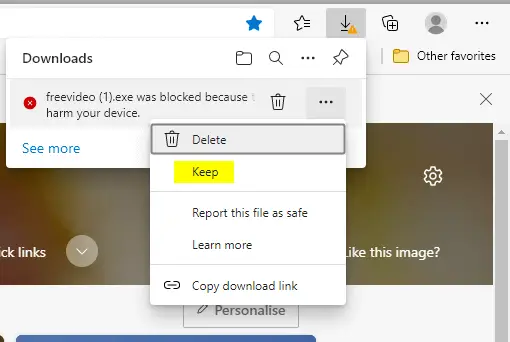
The SmartScreen Filter warns the user when running unrecognized programs or files downloaded from the internet. When you download files using Microsoft Edge, the file download is blocked if the source URL is blacklisted or the downloaded program fails the application reputation check by Microsoft SmartScreen filter.
However, Edge Chromium allows users to download the unsafe file regardless of the warning, by clicking on the “Keep” option in the Downloads flyout.
This article explains how to prevent users from downloading the ‘unsafe’ file on Microsoft Edge Chromium.Read more
How to Disable Automatic Maintenance in Windows 10
Windows automatically runs scheduled maintenance on a daily basis when you’re not using your computer. This feature is called Automatic Maintenance, which takes care of updating Windows Store apps and other software, running Windows Defender scans, system diagnostics, Disk Cleanup, etc.Read more
Access the Advanced Security Permissions Page via Right-click Menu in Windows 10
The Advanced Security Settings dialog allows you to configure NTFS special permissions for a file or folder along with the sub-folders (recursively), enable or disable inheritance, change ownership of an object etc. To quickly access the Advanced Security settings dialog, you can add it to the right-click menu for files and folders.Read more
Show or Hide Selected Files from the Right-click menu
In File Explorer, you can hide or show selected files using the “Hide selected files” toggle button in the Ribbon interface. This command can be added to the context menu using the method described in article Add any Ribbon Command to the Right-click Menu in Windows 10.Read more
How to Add a Ribbon Command to Right-click Menu in Windows 10
Ribbon UI consists of a command bar with a series of tabs. Each tab contains a set of commands such as Cut, Copy, Paste, etc. Ribbon UI was first introduced in Office 2007. Then it was included in File Explorer in Windows 8 and Windows 10.
This article explains how to add any Ribbon command from File Explorer to the right-click menu for files or folders.Read more
Show “Copy as Path” Always in Right-Click Menu Without Shift Key
This post tells you how to always show the Copy Path option in the right-click menu by default in Windows 10, without needing to press Shift every time.
The much useful “Copy as Path” built-in context menu exists in all versions of Windows. It’s an extended command which means you need to hold down the Shift key to access the extended menu item. Press and hold Shift, and right-click on a file or folder. Click “Copy as Path option” in the context menu. The object’s (file or folder) full path is now copied to the Clipboard.Read more