When you press the F1 key in Windows 10 or 11, it opens Microsoft Edge and loads the How to get help Bing search page showing a video on “how to get help in Windows 10”. Using a registry edit, you can stop F1 from opening your browser especially if it obstructs when gaming or performing other tasks.Read more
scripts
Find the Current Lock Screen Spotlight Wallpaper File Name in Windows 10/11
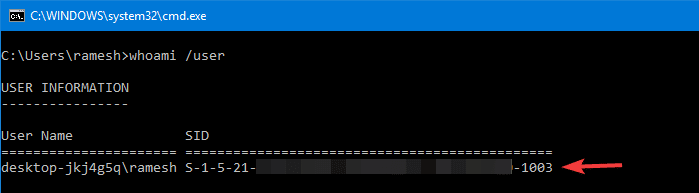
Windows 10/11 Spotlight wallpaper images that appear on the lock screen are stored deep inside the Local Application Data folder, under the Assets folder, as we’ve seen in the article, How to Backup Windows Spotlight Images.
We’ll see how to find the file name of the currently displayed Lock Screen (Windows Spotlight) image so that you don’t have to preview 50+ files in your Assets folder to locate a single wallpaper file.Read more
How to Copy as Path Without Quotes or in File URI Format
When using the built-in Copy as Path context menu option or the Copy Path ribbon button to copy file names to clipboard, the output would contain quotes for file/folder name paths, such as below.Read more
Automatically Take a Screenshot and Open it in Editor
Using the WinKey and PrintScreen keystroke is probably the fastest way to take a screenshot (and automatically save it to a file) of the entire screen in Windows 8 and Windows 10. When using this method, the screenshot image contains your entire screen, including the Taskbar and everything. And in most cases, you may have to crop the image before sending or sharing it with someone, so that only the relevant portion is shown.
This article tells you how to take a screenshot of your entire screen and open the saved image in the editor — both operations in a single click.Read more
Associate .SH Shell Scripts with Bash in Windows 10
If you’ve installed Bash on Ubuntu on Windows in Windows 10 version 1607 and higher, and want to associate .SH shell scripts with Bash, here is a quick script solution.Read more
How to Find Windows Installation Date and Time
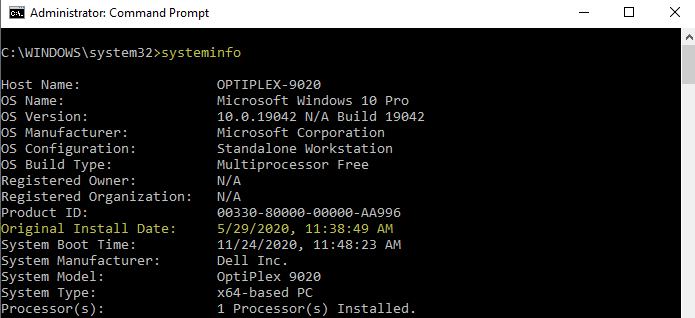
You may sometimes think of reinstalling Windows, especially when its performance goes down after a few years due to several different factors. And, you may like to know the date and time of your current Windows installation.
This post shows you the different methods using which you can determine the original installation date and time of your Windows installation. The information applies to all versions of Windows, including Windows 10.
Note that in Windows 10, the following methods show the installation date of the most recent feature update you installed, and not the install date and time of your 1st Windows 10 build.
How to Make Snipping Tool Default to New Snip when Launched
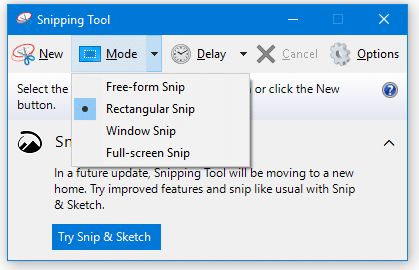
Snipping Tool is a handy screenshot tool included in Windows Vista and higher, with the annotation feature. Running Snipping Tool in Windows Vista and 7 would start the utility in capture mode (New rectangular snip) automatically, but this has changed in Windows 8 and Windows 10. In Windows 8 and 10, the user needs to … Read more
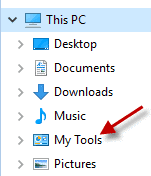
How to Add a Custom Folder under “This PC” in Explorer
You can add custom folders to the Explorer navigation pane in pretty much all versions of Windows. This post has the instructions on adding a custom folder under This PC in the navigation pane in Windows 10/11 File Explorer.
Show Hidden and Protected Files via Right-click Menu Toggle Option
In order to view protected and hidden files in Explorer, it takes a minimum of six mouse-clicks, which can be a big inconvenience for users. So here comes a script and registry edit that adds the “Show Hidden and Protected Files (toggle)” option to right-click menu.Read more
How to Change Win + E Shortcut Target in Windows 10/11
The WinKey + E keystroke, as well as the File Explorer shortcut on the taskbar, open Quick access view by default. You can change the default folder to This PC using Folder Options General tab, or make it open to the Downloads folder using a registry method.
But, how to make Windows 10’s File Explorer default to a custom folder or the Libraries section?
The user interface provides no option to set a custom destination for WinKey + E keystroke or the File Explorer pinned taskbar item. As you may have noticed, the File Explorer Pinned taskbar shortcut target can’t be modified via Properties, as it’s a special shortcut with the Target field grayed out or read-only.
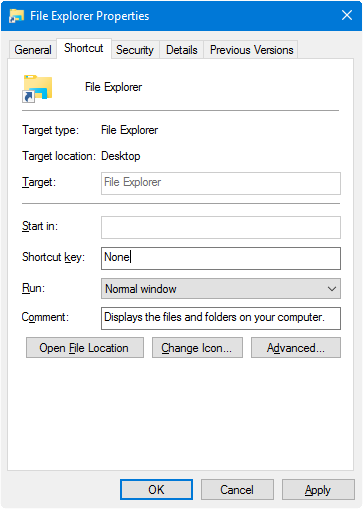
However, you change the WinKey + E or the File Explorer shortcut target using a registry edit without breaking any other setting.Read more