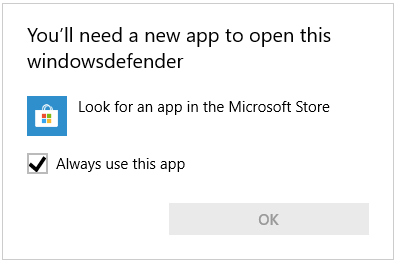
After installing the Windows 11 Feature Update, you may notice that the Windows Defender Security settings page can’t be opened. Nothing may happen when you open the Windows Security dashboard, or the following error may occur when you do so:Read more
powershell
How to Reinstall Windows Terminal in Windows 11
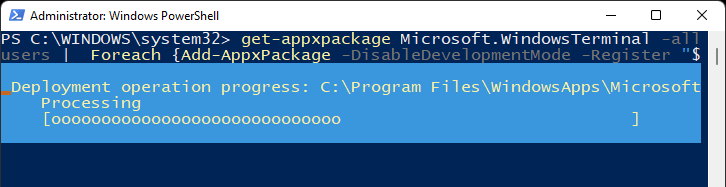
Windows Terminal is a modern terminal application for users of command-line tools and shells like Command Prompt, PowerShell, and Windows Subsystem for Linux (WSL). If you’ve uninstalled the Windows Terminal app in Windows 11 accidentally and need it back, you can reinstall the app using a couple of methods.Read more
How to Restore Missing “Print Management” Console
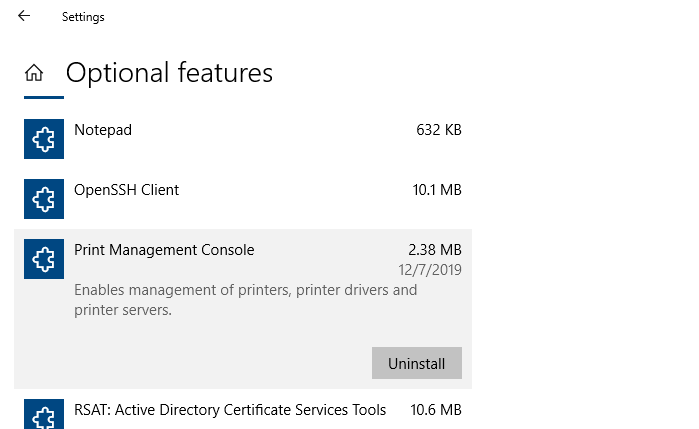
After installing a Windows 10 Feature update (v2004 or higher) or Windows 11, you may observe that the Print Management MMC console is missing from the system. Print Management is a Microsoft Management Console (MMC) snap-in that lets you install, view, and manage all printers on your local computer or the network. You can add or delete printer driver packages, manage the print queue, and do much more.
This issue can occur in Windows 10/11 Professional or Enterprise edition. Note that the Print Management console is not available on Home editions of Windows. If you’re using Windows Home Edition, this article doesn’t apply to you.
The Print Management shortcut may be missing in the Administrative Tools folder. And, when you attempt to run printmanagement.msc directly, you’ll see the following error:
Windows cannot find 'printmanagement.msc'. Make sure you typed the name correctly, and then try again.
Also, copying the file printmanagement.msc file from another Windows 10 computer and running it would cause the error “couldn’t load the snap-in” since the supporting files are missing from the computer.
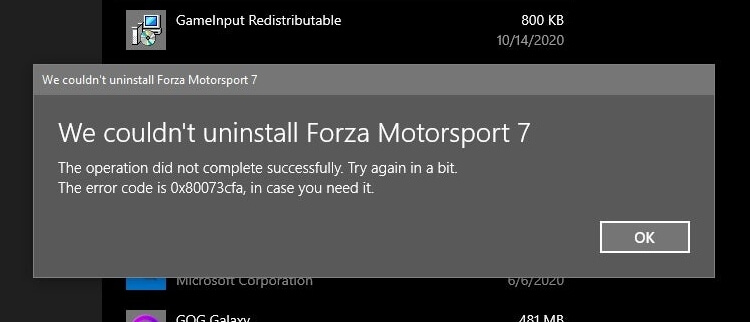
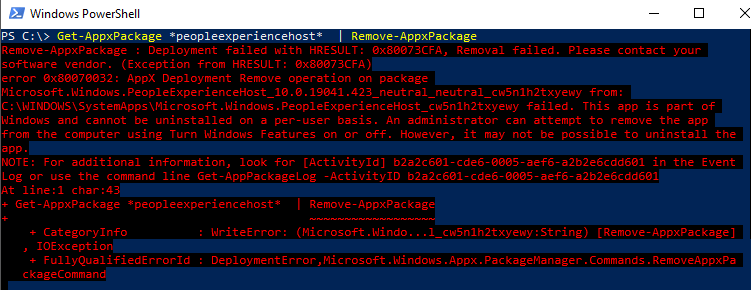
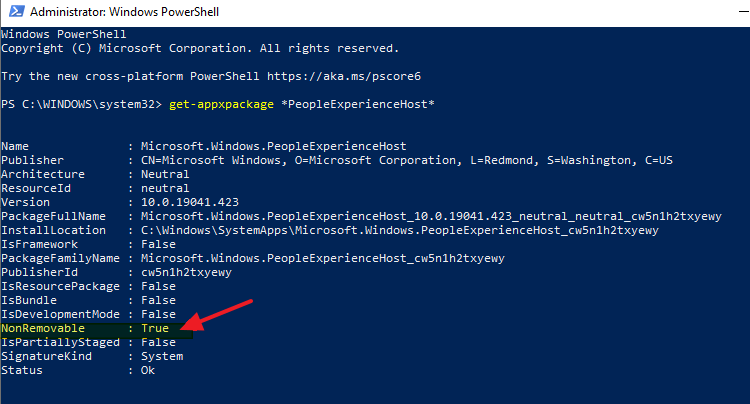
Windows Defender Shows the Same Threat Repeatedly. How to Clear the Protection History
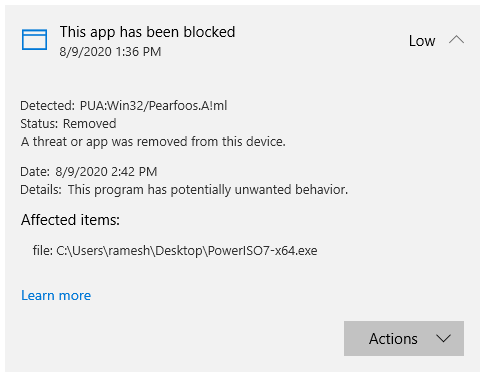
On some Windows 10 and 11 computers, Microsoft Defender Antivirus may repeatedly warn about the same threat, although you’ve taken the necessary action (remediated) on that threat.
When you click “Start actions” after choosing “Remove”, nothing happens. Windows Defender would keep showing that non-existent threat.Read more
Find the Total Execution Time of a Command or Program in Windows
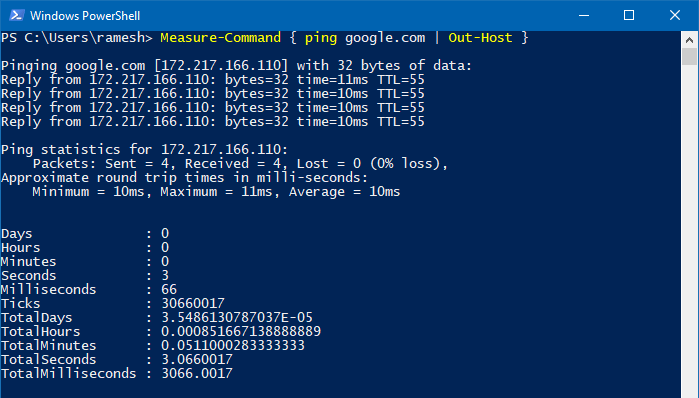
You may sometimes want to to find the total execution time of a command or program you run. To optimize a script or program, it’s essential to know how long does it take for it to complete execution. This helps you compare the total run time of Program A vs. Program B and optimize your code, especially if you’re a professional software developer, analyst, or software tester.
Measuring the total execution time of a script or process is one of the most critical aspects of performance optimization. This article discusses various methods to find the total execution time of a program, script, or command in Windows.
How to Change File Date or Timestamp in Windows
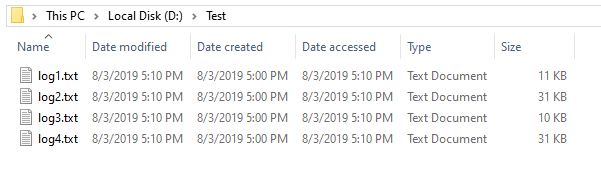
Windows maintains three different date/timestamps for every file and folder. They are “Date Created,” “Date Modified,” and “Date Accessed.” You may have to change the modified, created, or last accessed timestamp of a file or folder in some situations.
For instance, I had to change the timestamp of some files to test the Robocopy sync method when writing an article on folder compare and synchronization. Other users may need to change the date or time of a file for backup or archiving purposes.
Let’s see some methods to change the created date, modified date, or last accessed date of files in this article.
Read more
How to Change Shortcut (.lnk) Target in Bulk Using Script
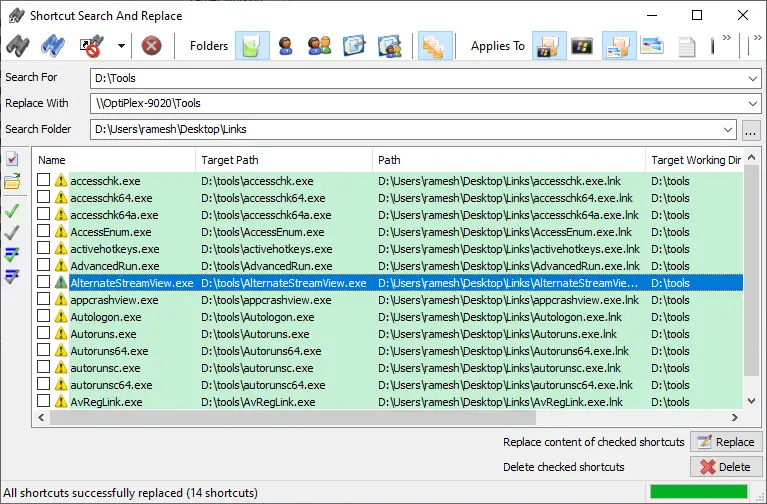
Many users have shortcuts pointing to various network shares from other systems or your domain’s storage server. If your company migrates the server and changes the computer name, share name, or folder path, you need to manually update the shortcut targets to point to the right destination. In most cases, the folder structure may remain the same, but the server name usually changes.Read more
Copy Folder Structure without Copying Files in Windows
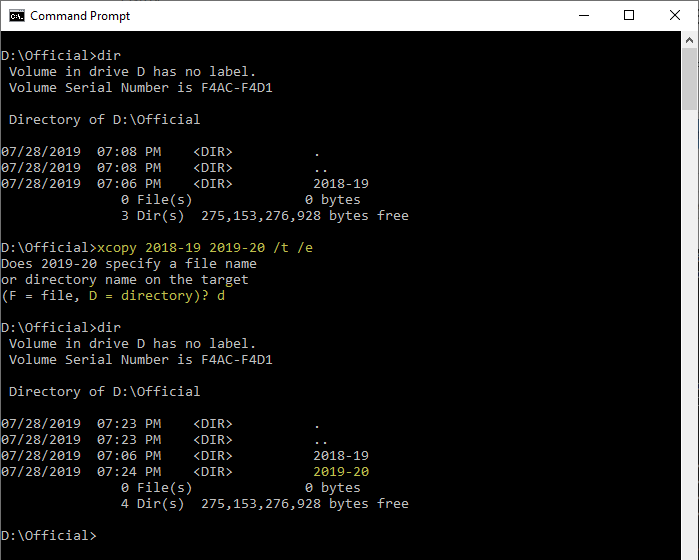
There are situations where you want to copy a folder structure without copying the files in that folder and sub-folders. For instance, you may want to replicate the directory structure of your expenses or accounting folders in order to organize them year-wise.
I have the following directory structure to store the documents pertaining to the financial year 2018-19. For the next financial year, I would want to copy the directory structure (without files) to the parent folder named 2019-20 to maintain uniformity.Read more
How to Flip or Reverse a Text File Using Different Ways in Windows
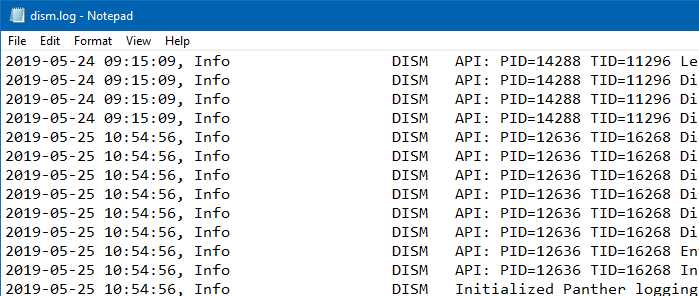
When analyzing plain-text log files such as the Web server logs or the Sfc, or DISM log files, you may sometimes prefer the most recent items appearing at the top. However, most of the log files that Windows generates would have the oldest entries listed first — entries listed in chronological order. You may be … Read more