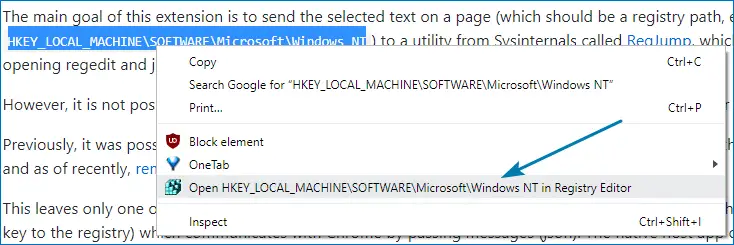
Many of our articles contain information about modifying the registry. To quickly open the Registry Editor to a selected key from the web browser, you can browser add-ons available for Chrome, Firefox or Internet Explorer.Read more
registry
How to Start Task Manager As Administrator (Elevated) by Default in Window 7
Task Manager in Windows Vista and Windows 7 runs in non-elevated mode by default, showing only those processes running under the current user context. To be able to terminate or manage a process running under other user accounts, or to log off other users, you need to elevate Task Manager by clicking the Show processes from all users button in the Processes tab.Read more
Backup Windows 10/11 Services Startup Type Configuration
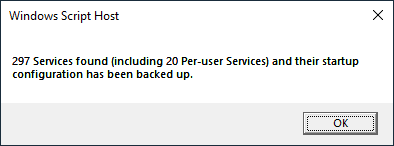
After doing a fresh install of Windows, disabling unused Windows Services is one of the time-consuming tasks you perform. Once configured, you can back up the service startup state using a Script so that it can be used for subsequent installations or if you need to automate the task on several computers.
Services state backups can also help when you troubleshoot Windows services and want to quickly roll back the changes you made.
Take a Screenshot of UAC Dialog (User Account Control)
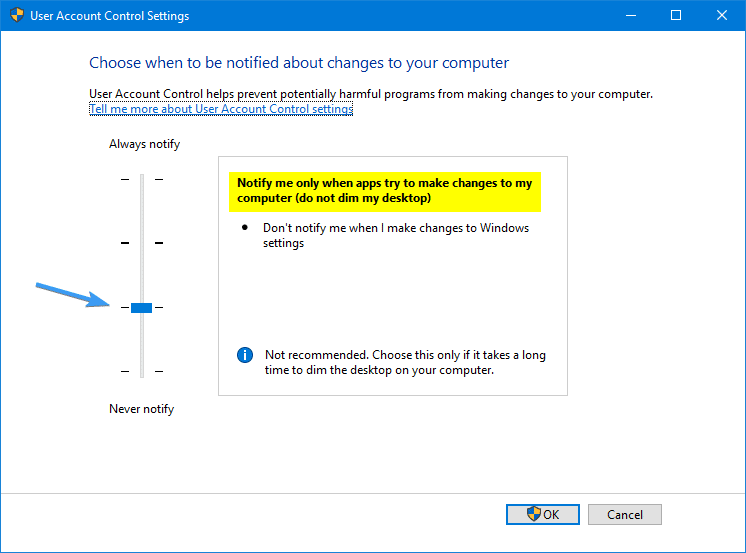
The User Account Control (UAC) elevation dialog is displayed on a secure desktop, and hence the Print Screen button wouldn’t capture it. If you’re a technical writer who needs to capture the User Account Control dialog to add it to documentation or help file, here are some ways to take a screenshot of the User Account Control (UAC) prompt.Read more
Green Tick or Blue Arrows Icon Overlay Displayed for Files and Folders
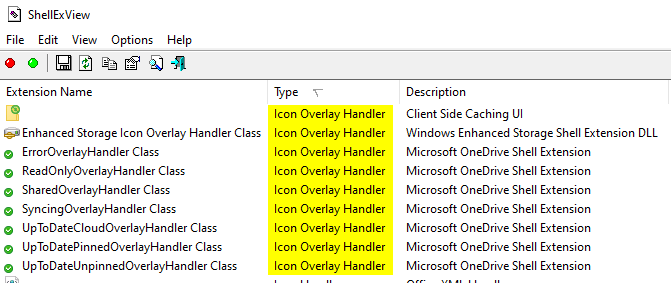
If you’re wondering why Explorer shows certain files or folders with some icon sign in the corners, such as a white tick mark in a green box, or chevron in a blue box, or any other symbol such as a white tick in round green background regardless of the file type, then you’ll find this post helpful.
These are known as icon overlays, added by programs to provide additional information about the files or folders marked with the overlay symbol. For example, a backup program that you use may place an icon overlay for files and folders that are backed up, and a different symbol for files that aren’t included in the backup.Read more
Add “Export to Microsoft Excel” to Internet Explorer Context Menu
 The Export to Microsoft Excel context menu option in Internet Explorer helps you export tabular data in a Web page to Microsoft Excel. If for some reason the Export to Microsoft Excel option is not added after installing Microsoft Office, you can add it back manually.Read more
Clean Up the Right-Click Menu in Internet Explorer
The right-click menu in Internet Explorer may get cluttered up when you install download managers, Toolbars and other browser add-ons. The items that you seldom use can be removed to tidy up the right-click menu.Read more
How to Start Internet Explorer in InPrivate Browsing Mode by Default
Summary: This post tells you how to start Internet Explorer in InPrivate mode by default, using a shortcut or double-clicking a .url or .htm file. Instructions apply to all versions of Windows, up to Windows 10 as of the last revision of this post.
InPrivate Browsing mode in Internet Explorer enables you to surf the web without leaving a trace in the computer, as the cache is erased automatically when the “InPrivate Browsing” window is closed.Read more
[Tip] Change the Default View Source Editor in Internet Explorer
When you click the View Source command in Internet Explorer, it opens the html source using IE (F12) Developer Tools. If you want to change the default view source editor to a different viewer such as Notepad, Notepad++, use these steps:Read more
How to Determine the Last Shutdown Time and Date in Windows
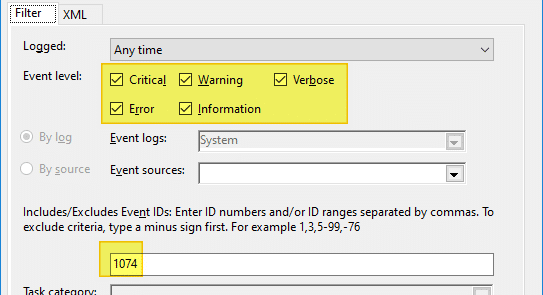
The easiest way to determine the last shutdown date and time is to check the event logs. When you shut down a computer Event ID 1074 is written to the event log which denotes a clean shutdown. The following instructions apply all versions of Windows, including Windows 10.Read more