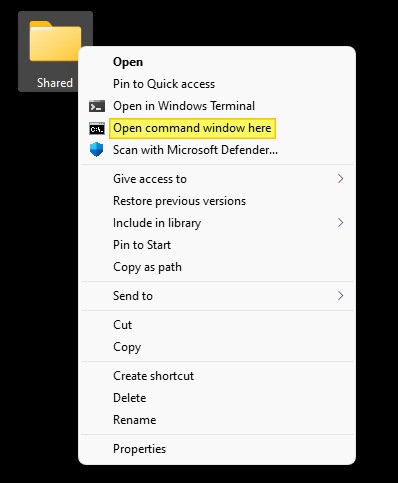
In Windows 11, the context menu “Open Command window here” doesn’t exist by default. Instead, you’ll see the “Open in Windows Terminal” and “Open PowerShell window here” (when you press Shift + right-click) options in the folder context menu.
This article tells you how to add “Open Command window here” (in Windows 11) to open a Command Prompt window in that directory path.Read more
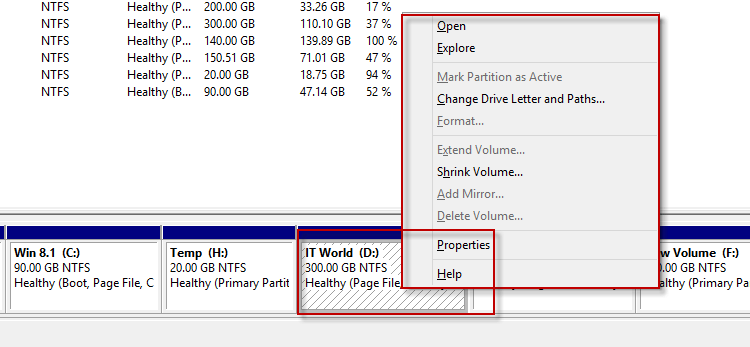
In the Disk Management console, the “Delete Volume” option may be dimmed out in the right-click menu for USB flash drives. So, users may be wondering how to remove one or more partitions in the external USB drives.
Cause
The “Delete Volume” option may be missing if the page file (pagefile.sys) exists in the partition, or the disk contains an Operating System.
If you look at the image above, you can see that a Page File exists in the D: drive — denoted by the line Healthy (Page File). Hence the Delete Volume option is grayed out.
This article explains how to delete the volume on a USB drive if the option is missing in Disk Management.Read more
Summary: This article tells you how to reset the WindowsApps folder permissions (and ownership) to Windows default.
The WindowsApps folder under the Program Files folder stores the modern app packages. Each package folder under WindowsApps contains a manifest (named AppxManifest.xml) that contains a special XML namespace for packaged apps. When you reinstall built-in apps using PowerShell add-appxpackage command-line, it uses the corresponding app’s package folder under WindowsApps.
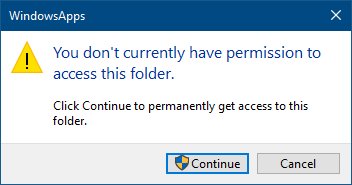
The WindowsApps folder is not browsable in File Explorer by default. This is due to tight permissions assigned to the folder.
To access this folder, many users tend to take ownership of the folder and sub-folders. Some users also change the permissions for this folder and sub-folders arbitrarily, and later observe that some of the installed Store apps fail to work.
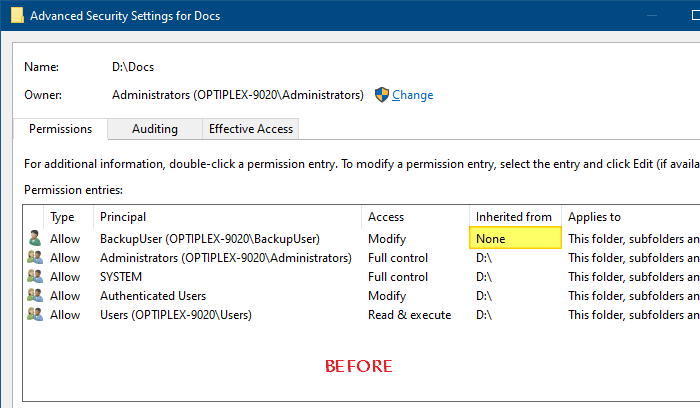
Even worse is that some users would reset the permissions for WindowsApps, its subfolders, and files (recursively) using the Icacls.exe reset command-line. This is not recommended, as the WindowsApps folder doesn’t inherit any permission entries from the parent (Program Files) folder by default. Instead, this folder has very restricted permissions, including one or more conditional ACEs.
Incorrect permission entries assigned for a user account can prevent programs from accessing the file or folder. Or it may cause unauthorized users to have full access to the objects. In some cases, there may be a reference to obsolete user accounts (or SIDs) in the ACL (permissions list) that you want to clean up.
Have you modified the NTFS permissions for a file or folder wrongly, and want to revert to default (inherited ACLs)?
This article tells you how to replace the file or folder permissions with default inherited permissions quickly using the icacls.exe command-line. The information applies to all versions of Windows, from Windows Vista through Windows 10.
Summary: This article explains the various methods to view the permissions for any Service in Windows. It also covers the tools and methods to modify the service permissions easily.
Just as file system objects and registry keys have permissions, each service in Windows can have a set of permissions. The permission entries for a service determine who can stop the service, query its status, change the startup type, modify the service configuration, or delete the service.
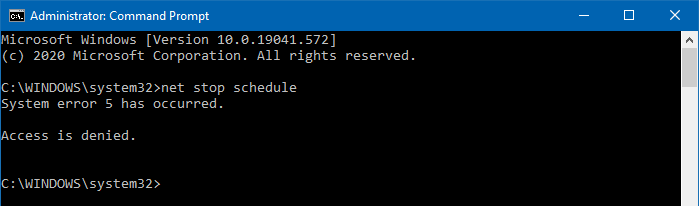
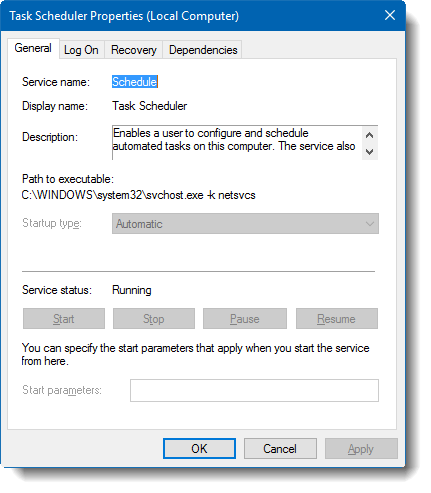
You may have observed that the Start, Stop, and the Startup type controls are grayed out for some services, even when you’re logged in as an administrator.
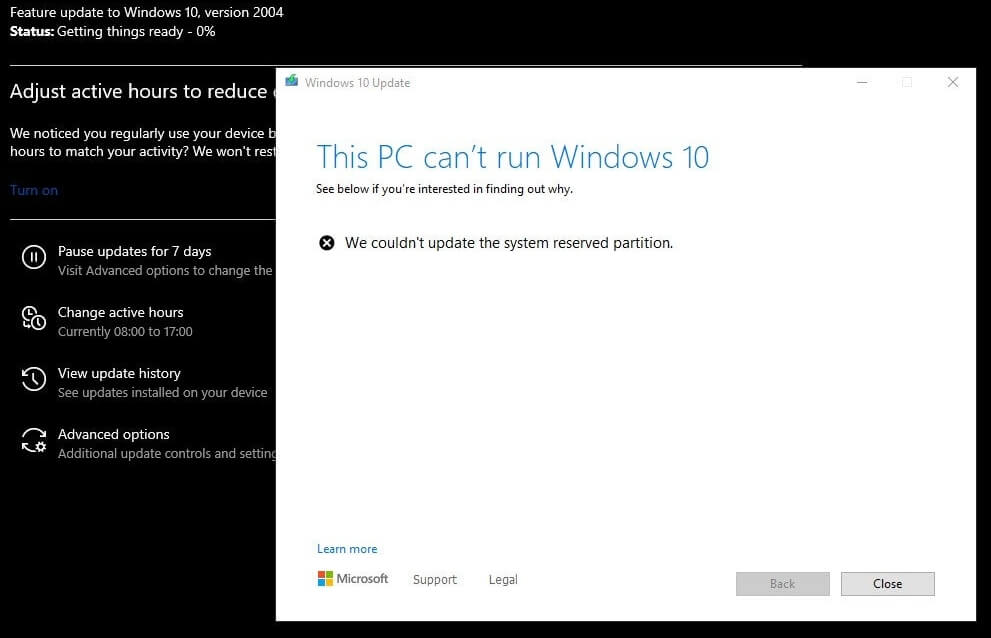
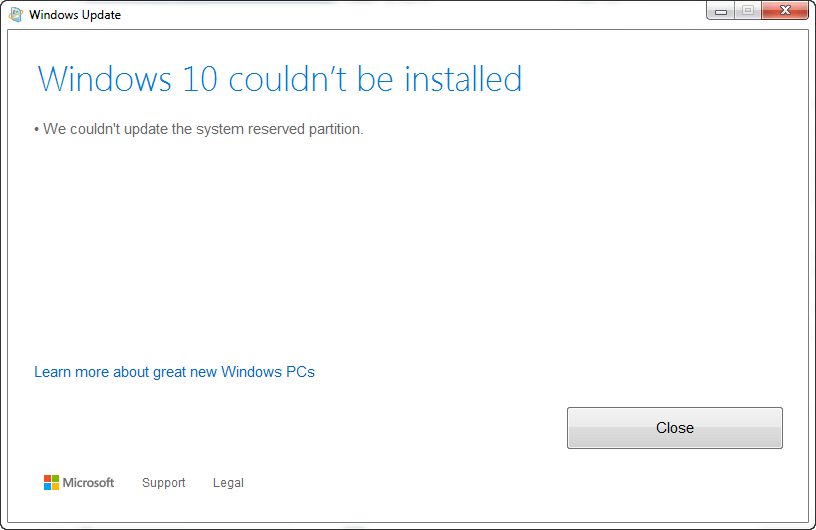
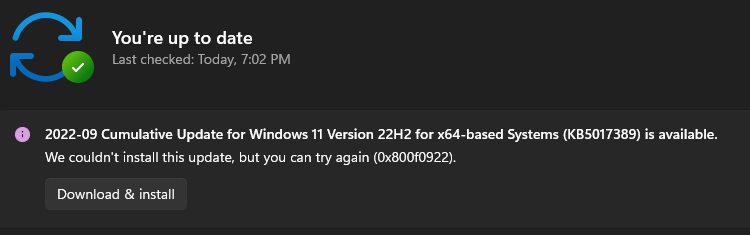
When upgrading to Windows 10 or 11 from Windows 7, 8, or 8.1, or updating Windows 10 or 11, you might encounter the error We couldn’t update system reserved partition, or error 0xc1900104, or error code 0x800f0922.
Error when updating Windows 10Error when upgrading from Windows 7, 8, or 8.1.
When this happens, the setupact.log in the Panther directory may contain the following entries:
Info       CFreeSystemPartitionDiskSpaceChecker: checked InsufficientSystemPartitionDiskSpace, found HardBlock.Not enough space on partition [\\?\GLOBALROOT\Device\HarddiskVolume1\] Required: 15 MB. Available: 9 MB.
Info       ConX::Compatibility::FreeSystemPartitionDiskSpaceCheckerImpl::SaveToPersistableData: Save data - FreeSystemPartitionDiskSpaceCheckerImpl = no
Info       ConX::Compatibility::CCompatibilityHost::SerializeData: Provider wsc:setup: is serializing 28 bytes of data.
Info       [0x090008] PANTHR CBlackboard::Open: C:\$WINDOWS.~BT\Sources\Panther\CompatScanCache.dat succeeded.
Info       [0x090009] PANTHR CBlackboard::Close: c:\$windows.~bt\sources\panther\compatscancache.dat.
Info       ConX::Compatibility::CCompatibilityController::ReportData: Type: [0], ID: [2], ReportOption: [2]
Info       ConX::Compatibility::CCompatibilityHost::SetScanResult: Provider wsc:setup: reports HardBlock

Info       MOUPG  InitializeRoutine: MOSETUP_ACTION_IMAGE_EXIT
Info       MOUPG  ImageExit: Initializing SetupResult: [0xc1900201]
Info       MOUPG  ImageExit: Initializing Extended:    [0x20008]
This happens if the System Reserved Partition (SRP) or the EFI partition is full. The EFI or the System Reserve Partition partition on your hard drive that stores boot information for Windows.
According to Microsoft, to upgrade your device, you’ll need to free up 15MB of space on the SRP using the appropriate method below. And then try the upgrade again. If you’re updating Windows 10, you need to free up 13MB.Read more
When installing an update, especially a Cumulative Update or .NET Framework package in your Windows 10 or 11 computer, the update installation may fail with an error code 0x800F0922 (“CBS_E_INSTALLERS_FAILED“) or 0xc1900104 or the error message “Something didn’t go as planned”.Read more
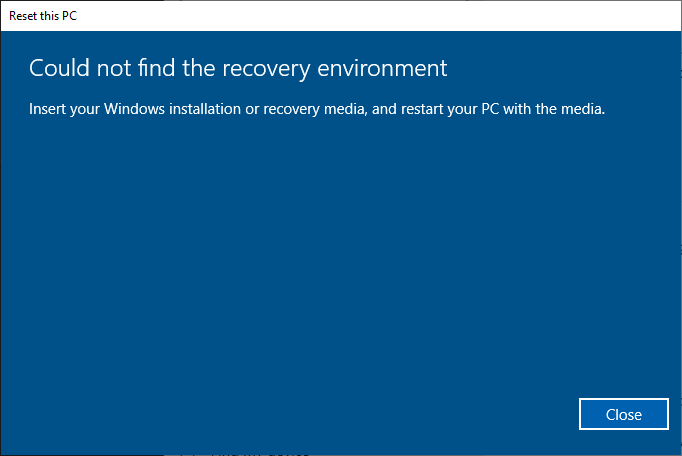
When you attempt to use the Reset this PC option to Reset (“Remove everything”) or Refresh (“Keep my files”) Windows 10 or 11, the following error may appear:
Could not find the recovery environment

Insert your Windows installation or recovery media, and restart your PC with the media.
This error occurs if the Windows Recovery Environment (Windows RE) is disabled or if the WinRE image is corrupted in the system.
With the Windows RE feature disabled on the computer, if you boot into the Windows RE (without the setup or repair disk), the following features would be missing in the Windows Recovery Environment:
Additionally, if Windows RE is disabled or corrupted, the following error occurs when you attempt to create a Windows Recovery Drive (USB).
We can't create a recovery drive on this PC
Some required files are missing. To troubleshoot problems when your PC can't start, use your Windows installation disc or media.
This article tells you how to fix the errors “Could not find the recovery environment” and “We can’t create a recovery drive on this PC” by enabling or repairing the Windows Recovery Environment feature.Read more
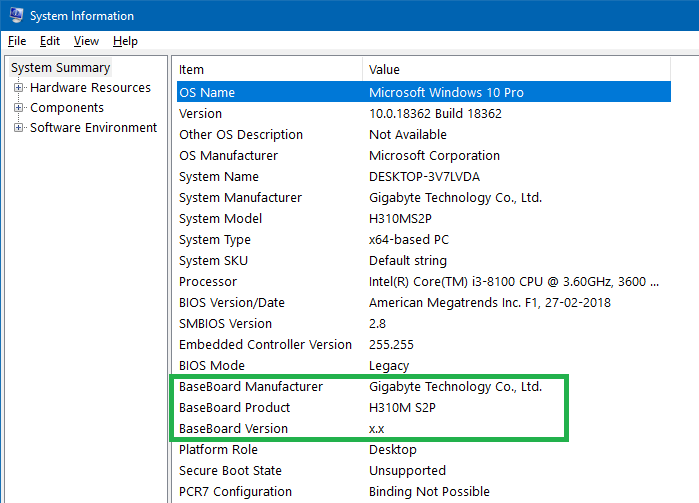
Knowing the technical specifications of your motherboard is very important, especially if you’re planning to upgrade the processor or RAM. Once you find the make and model of your motherboard, you can get the user manual from the respective manufacturer’s site.
If you’ve got a computer from a friend and want to know the system specifications — including the motherboard make and model, information about the memory module, etc., you can do so without using any third-party tool.Read more
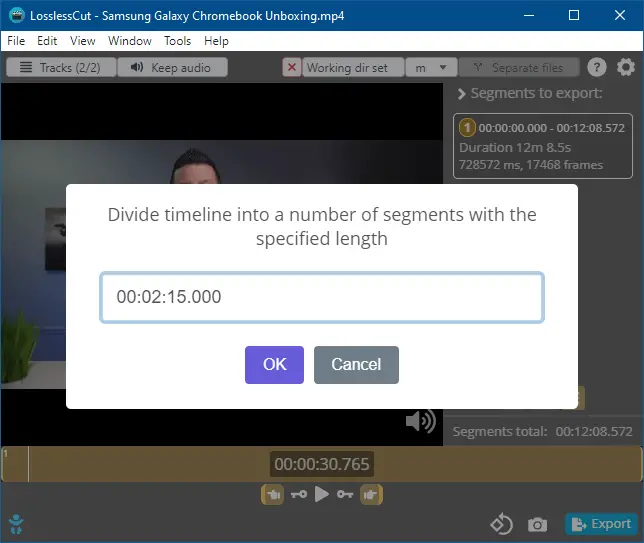
The built-in Photos app can be used to cut a portion of a video file. Sometimes, you may need to split a video or audio into multiple parts with a specific duration. It helps you share them on Twitter or any other social networking site which has a length limitation. For instance, Twitter allows you to upload videos of length not exceeding 140 seconds (2m 20s.)
To split a video into multiple equal parts, you may have to repeat the procedure multiple times if you’re using the Photos app. Instead, you may use a third-party tool to split a video (MP4, MKV, AVI, or MPG) or audio (MP3, WAV, etc.) into multiple equal parts automatically.
In this article, let’s see how to cut a selection of a video or audio and save the selection to a separate file. This article also describes how to split a video or audio into multiple equal parts.
 Even worse is that some users would reset the permissions for WindowsApps, its subfolders, and files (recursively) using the